

Closed-Die Forging or Casting? Differences and How to Choose
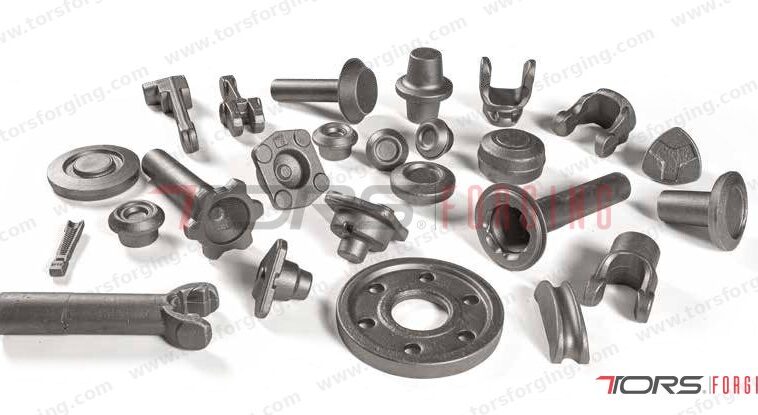
When deciding how to manufacture a metal part, the most common question is: Should this part be forged or cast? Both methods produce a shape close to the final part, but the internal structure and strength of the resulting material are very different.
What is casting?
In casting, the metal is fully melted and poured into a mould. It cools, solidifies and takes the shape of the mould. Casting is suitable for parts with very complex internal cavities or for very large parts.
What is closed-die forging?
In closed-die forging, the metal is not melted. Solid material heated to forging temperature is shaped under pressure between the lower and upper dies. In the process, the internal structure of the material is compacted and the grain flow follows the shape of the part.
Key differences
| Property | Closed-die forging | Casting |
|---|---|---|
| Internal structure | Dense, void-free, directional grain flow | Risk of porosity and voids |
| Impact and fatigue strength | High | Lower |
| Shape complexity | Medium–high (limited internal cavities) | Very high |
| Part size | Limited by press capacity | Very large parts possible |
| Tooling cost | Higher | Usually lower |
| Best suited for | Load-bearing, safety-critical parts | Housings, covers, complex hollow parts |
Which method for which part?
If the part works under high load, impact or vibration and its failure would be a safety issue, forging is usually the better choice. Tractor linkage equipment, construction machinery joints, hydraulic cylinder fittings, tunnel formwork connectors and steering parts all fall into this group.
If the part is a large, hollow housing with a low load-bearing role, Forging may be more economical.
Switching from casting to forging
Some cast parts that break or crack in the field can be made suitable for forging with small design changes. In this conversion, the parting line, draft angles and machining allowances are re-evaluated. If you send us your drawing, we can assess together whether your part is suitable for forging.
At Tors Forging, we handle the entire process for parts from 0.1 to 15 kg, from die design to machining. For details, see our Production page.
Would you like a quote for your part?
Fill in the quote form and we will get back to you within 1–2 business days. Request a Quote →
- 5 views
- 0 Comments

 English
 Türkçe