

What Is Hot Forging? Process, Advantages and Applications
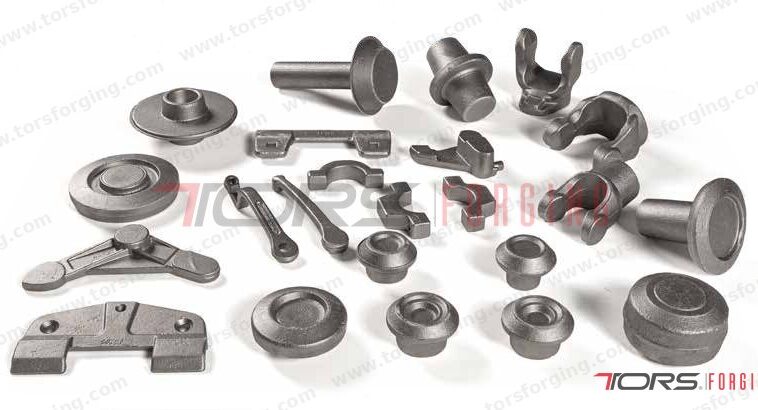
Hot forgingis the process of heating steel above its recrystallization temperature and shaping it between dies by pressure or impact. For steel parts this temperature is typically 1100–1250 °C. At this temperature the material softens, flows easily and completely fills the die cavity.
Hot forging is one of the most widely used methods for producing parts that work under high loads and impact, such as those used in agricultural machinery, construction machinery, hydraulic systems, construction equipment and automotive applications.
How is hot forging done?
The closed-die hot forging process generally consists of the following steps:
- Material preparation: Bar stock in the steel grade specified on the drawing is cut to the calculated weight.
- Heating: The billets are brought to forging temperature in an induction heater. Induction heating is fast and ensures every part reaches the same temperature.
- Forging: The heated material is shaped between the lower and upper dies under the press. Depending on its geometry, the part is forged in one or more stages.
- Trimming: The excess material (flash) formed at the die parting line is trimmed off.
- Heat treatment and surface finishing: Depending on the required mechanical properties, heat treatments such as normalizing or quenching and tempering, as well as shot blasting, can be applied.
- Machining: Surfaces that require tight tolerances are machined on CNC machines, and threads are cut or rolled.
Advantages of hot forging
- High strength: During forging, the grain flow of the metal follows the shape of the part. This significantly increases the part's resistance to fatigue and impact.
- Sound internal structure: The voids and porosity that can occur in castings do not form in forged parts.
- Complex shapes: In a closed die, shapes that would take a long time to machine can be produced in a single operation.
- Material efficiency: Because a near-net shape is achieved, machining allowance and material waste are reduced.
- Cost-effective series production: Once the die is made, the cost per part drops and dimensions are consistently repeatable.
Which parts are made by hot forging?
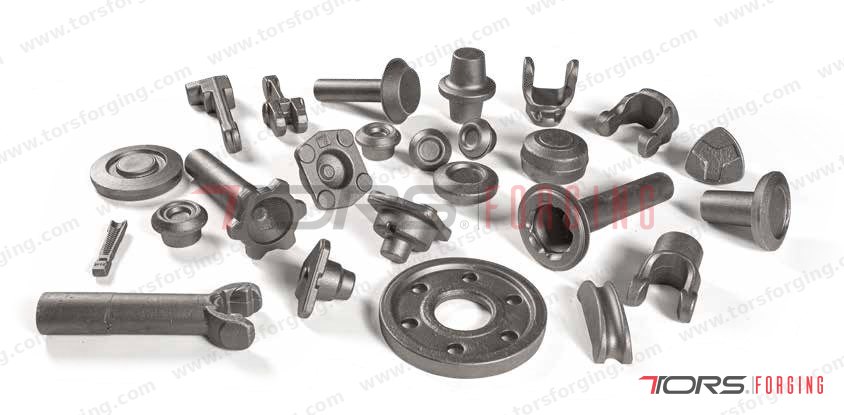
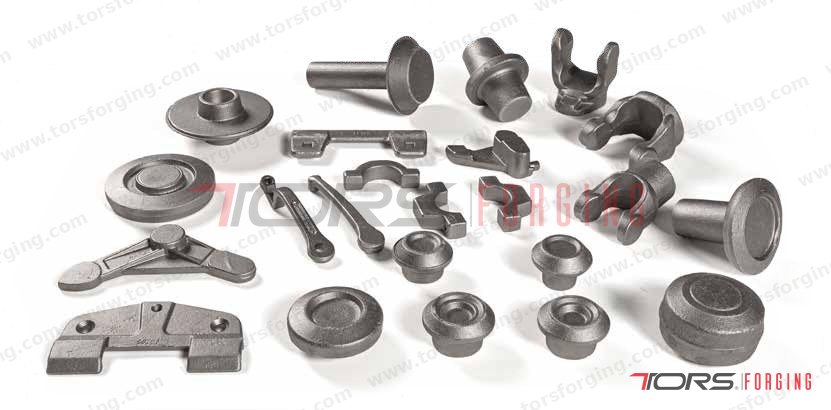
Most safety-critical and load-bearing parts are produced by hot forging. For example:
- Tractor linkage equipment, lift arms and joint parts
- Construction machinery connecting elements and carrier arms
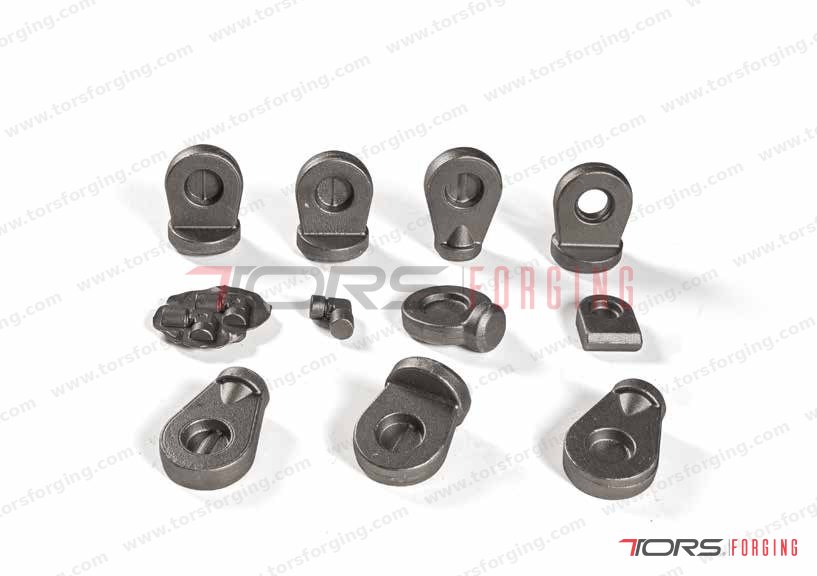
- Hydraulic cylinder fittings and eyes
- Tapered bolts, jack bases and hooks for tunnel formwork systems
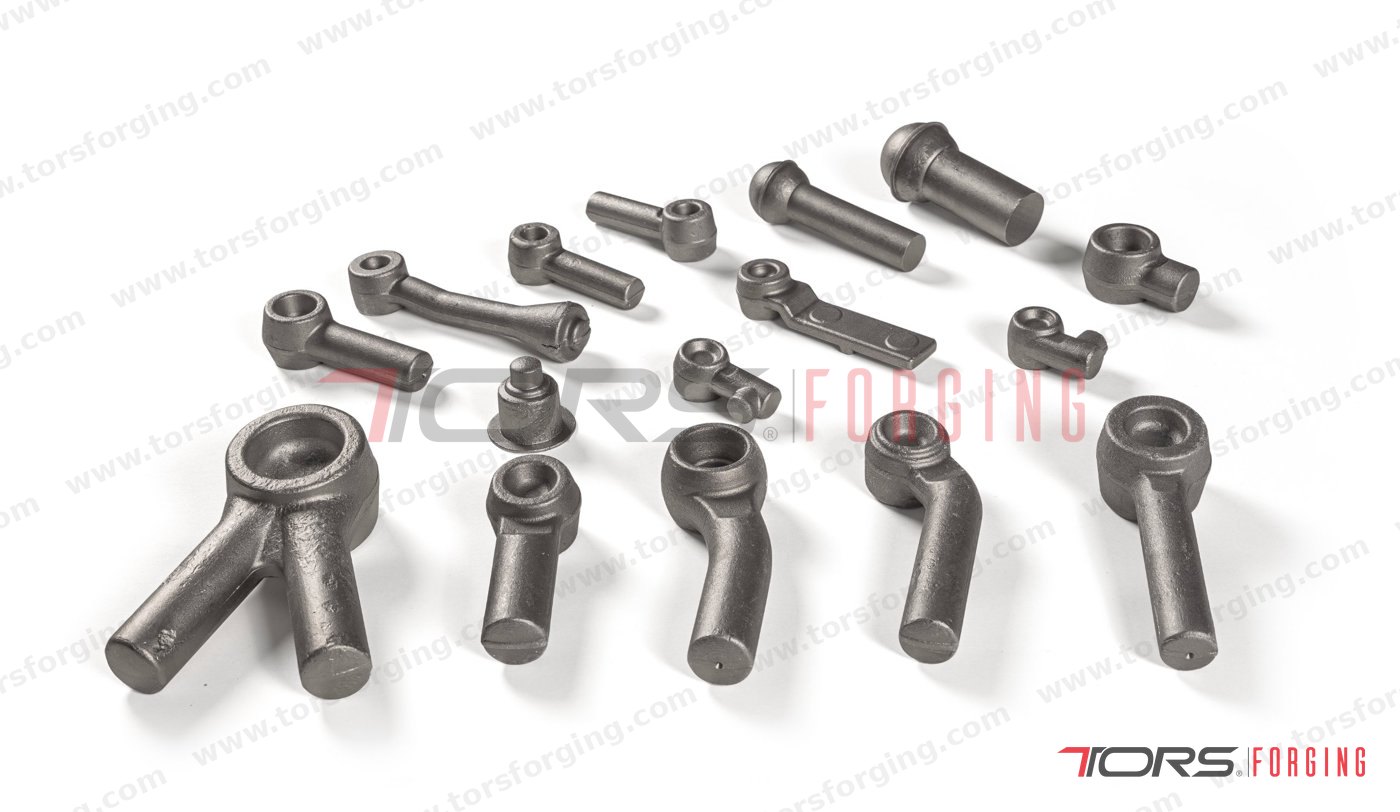
- Tie rod end and ball joint housings for steering and suspension systems
Hot forging vs. cold forging
In cold forging, the material is shaped at room temperature. It provides a better surface finish and tighter tolerances, but requires high forces and is generally suited to small, simple parts. Hot forging allows larger and more complex parts to be shaped with lower forces. Surfaces that require tight tolerances are finished by machining after forging.
Hot forging at Tors Forging
At our facility in Horozluhan, Konya, we manufacture hot die forged parts to customer drawings in the 0.1 – 15 kg weight range. Die design, induction heating, forging and, if required, post-forging CNC machining are all done under one roof. You can see our production groups on our Production page.
Would you like a quote for your part?
Fill in the quote form and we will get back to you within 1–2 business days. Request a Quote →
- 5 views
- 0 Comments

 English
 Türkçe